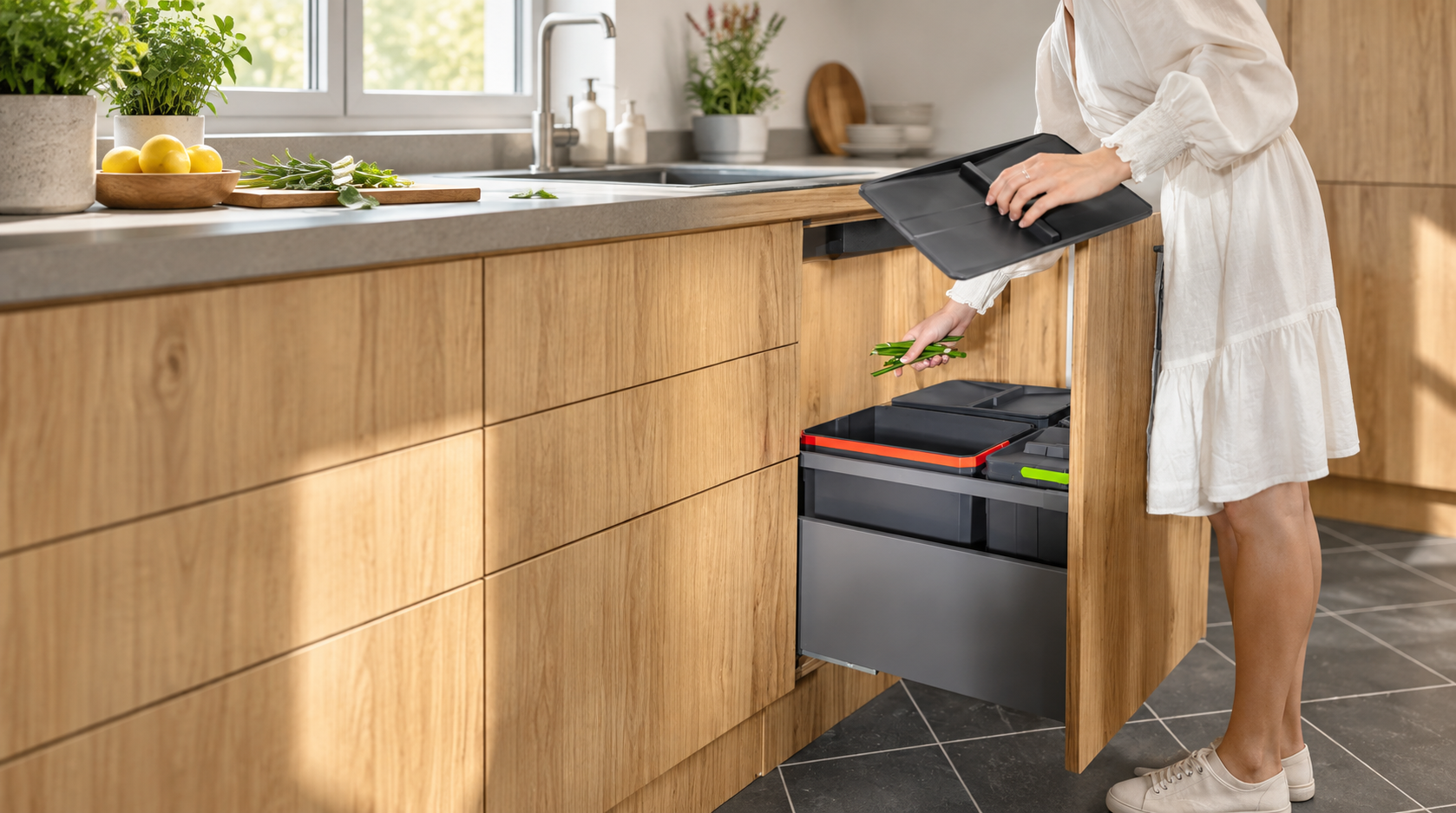
A built-in waste bin mounts inside a cabinet, usually on sliding rails attached to the door front, so opening the cabinet or pulling the door brings the bin out with it. This removes the freestanding bin as a visible object in the room entirely, but it only works if the cabinet is wide enough and deep enough for the specific bin system, which is the detail most people check after buying rather than before.
Why a Hidden Bin Changes a Kitchen's Look More Than Expected
A freestanding bin, however well chosen, is a tall, often brightly colored or starkly utilitarian object standing in the middle of an otherwise designed room. It's also usually the thing nearest the sink, so it sits in direct view from most angles of the kitchen. Removing it from view does more to clean up a kitchen's visual lines than almost any other single change, more than a finish upgrade on taps or hardware, simply because it removes an entire object rather than refining one that's already there.
This is why built-in waste systems have become close to standard in considered kitchen renovations, not because hiding rubbish is a new idea, but because the visual impact of removing it is larger than people expect until they've seen it done.
How Built-In Systems Actually Work
Most built-in bins use one of three mechanisms:
Door-mounted pull-out. The bin (or bins, often two side by side for recycling separation) is mounted on a sliding frame attached to the inside of the cabinet door. Opening the door pulls the bin frame out automatically, and closing it pushes the bin back in. This is the most common system in current kitchens, since it requires no separate action beyond opening the cabinet.
Soft-close pull-out drawer. A separate drawer front, independent of the main cabinet door, houses the bin on its own sliding rails with a soft-close mechanism. This is typically used when the bin cabinet doesn't have a standard hinged door, common in an island or a run of drawer-only cabinetry.
Corner or carousel systems. Designed for an awkward corner cabinet, these rotate or pull the bin out along a curved or angled track, making use of cabinet space that a standard pull-out can't reach efficiently.
Cabinet Width: The Spec That Decides Everything
This is the single most common point of mismatch between the bin system someone wants and the cabinet they actually have.
|
Cabinet width |
Typical bin configuration |
Notes |
|
30cm |
Single bin, 15-20 liter capacity |
Tight; suits a smaller household or a secondary bin location |
|
40cm |
Single bin, 30-40 liter capacity, or two smaller bins side by side |
The most common standard cabinet width for a dedicated bin unit |
|
50-60cm |
Two bins, each 15-20 liters, for separated recycling |
Common in kitchens that sort waste into at least two streams |
|
80cm+ or corner unit |
Three-bin systems, or a carousel/corner unit |
Suits households sorting into three streams (general, recycling, compost) or an awkward corner cabinet |
Measure the cabinet's internal width, not the external door width, since the bin frame needs to clear the cabinet's actual internal dimensions, including any face frame or hinge hardware that reduces usable interior space. A bin system sized for the external door measurement can end up too wide to actually slide into the cabinet once hinges and the frame are accounted for.
Depth and Height Matter Almost As Much
Depth. The bin needs to clear the full depth of the cabinet without hitting the back wall when the door is fully open, and without the bin's lid, if it has one, catching on the cabinet's internal shelving or plumbing if it's near the sink. A standard base cabinet is roughly 55-60cm deep; most bin systems are sized to fit this, but it's worth checking against cabinets that have been modified or that back onto plumbing.
Height. If the cabinet also houses plumbing (a common setup when the bin sits in the cabinet under or beside the sink), the bin's height needs to clear the sink's trap and supply lines. A bin that's too tall for the available vertical space either won't fit at all or will need to sit at an angle that reduces its effective capacity.
Single vs. Multi-Bin Systems
A household sorting waste into just one stream (general waste only, with recycling handled elsewhere, like a separate outdoor bin) is well served by a single-bin pull-out, which maximizes capacity within whatever cabinet width is available.
A household actively separating general waste from recycling, or further into paper, glass, and general, needs a multi-bin system from the outset, since retrofitting a second bin into a cabinet originally sized for one is rarely possible without replacing the entire unit. This is worth deciding before cabinetry is finalized in a renovation, since the bin cabinet's width is typically set based on the number of bins it needs to hold.
Matching the Bin System to How the Kitchen Gets Used
- High-traffic, frequent cooking: a larger-capacity single bin or a two-bin system reduces how often the bin needs emptying, which matters more in a kitchen generating waste daily from regular cooking.
- Strict recycling separation: a dedicated multi-bin system, often three streams, suits a household or a region with specific recycling requirements that a single-stream bin can't accommodate.
- Small kitchen, limited cabinet width: a single 30-40cm bin, or a corner carousel system if the kitchen has an awkward corner cabinet that would otherwise go underused.
- Island kitchens: a soft-close drawer-style bin, independent of a hinged door, fits naturally into an island's drawer-based cabinetry where a traditional door-mounted pull-out system doesn't apply.


Installation Considerations
Most door-mounted pull-out systems are designed to retrofit into an existing cabinet, provided the width and depth are compatible, without needing to replace the cabinet itself. The bin frame typically mounts to the inside of the existing door using the door's current hinges, so installation is often a reasonably straightforward DIY task for someone comfortable with basic cabinet hardware.
A corner carousel system or a soft-close drawer conversion is more involved, since it may require modifying or replacing the existing drawer runners or door hardware entirely, which is worth factoring into the decision if the kitchen isn't otherwise being renovated.
Common Mistakes
- Measuring the cabinet door's external width instead of the internal cabinet space, then finding the bin system doesn't actually fit once hinges and the frame are accounted for
- Choosing a single-bin system for a household that already sorts recycling, then finding there's no practical way to add a second bin later without replacing the whole unit
- Not checking cabinet depth against the bin system's dimensions when the cabinet is shared with under-sink plumbing
- Assuming all pull-out systems are door-mounted, when an island or drawer-based cabinet run needs a soft-close drawer system instead
- Underestimating bin capacity needed for the household's actual waste volume, leading to more frequent emptying than expected
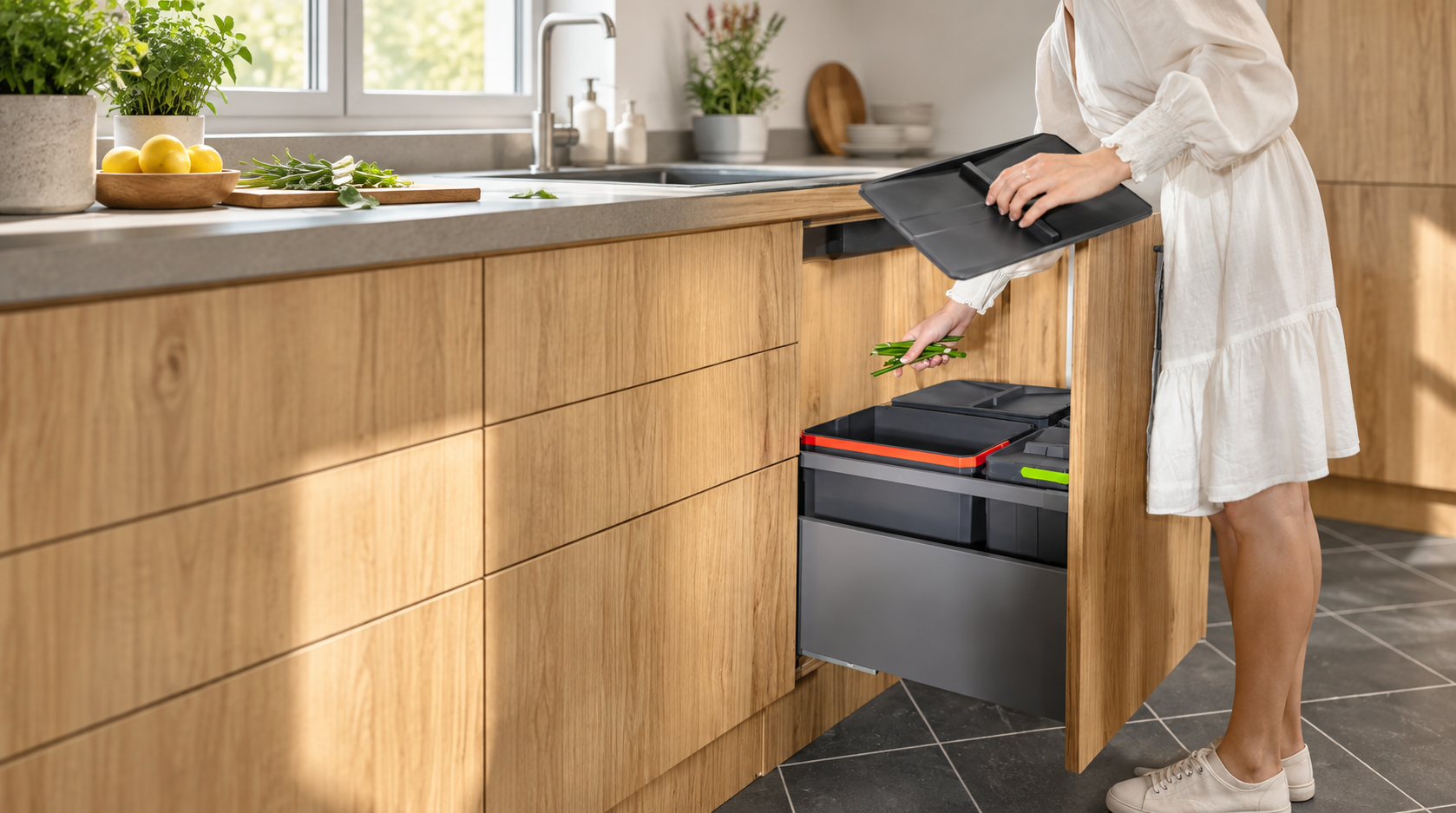
A built-in waste bin does more for a kitchen's visual lines than almost any other single upgrade, but only if the cabinet behind it is actually sized correctly. Measure internal cabinet width and depth, decide on single or multi-bin sorting before finalizing cabinetry, and match the mechanism (door-mounted, soft-close drawer, or corner carousel) to the specific cabinet type you have.
FAQ
What cabinet width do I need for a built-in waste bin?
A single bin typically fits a 30-40cm cabinet, while a dual-bin recycling system needs 50-60cm. A three-bin system or a corner carousel generally needs 80cm or more, or a dedicated corner cabinet. Always measure internal cabinet width, not the external door measurement.
Can I add a built-in bin to my existing cabinet, or do I need new cabinetry?
Most door-mounted pull-out systems are designed to retrofit into an existing cabinet using the door's current hinges, provided the internal width and depth are compatible. A corner carousel or drawer-conversion system is more involved and may require modifying existing hardware.
How do I know if my cabinet is deep enough for a bin system?
Measure the cabinet's full internal depth and compare it against the bin system's specified dimensions, checking that the bin clears the back wall when the door opens fully and doesn't catch on any internal shelving or nearby plumbing.
Can I retrofit a second bin into a cabinet that only has one now?
Rarely, without replacing the entire unit. A cabinet's width is typically set based on the number of bins it's meant to hold, so adding a second bin later usually means a wider cabinet or a full system replacement rather than a simple addition.
What's the difference between a door-mounted and a soft-close drawer bin system?
A door-mounted system attaches the bin frame to the inside of an existing hinged cabinet door, so opening the door brings the bin out automatically. A soft-close drawer system is a separate drawer front on its own rails, used where the cabinet doesn't have a standard hinged door, such as in an island.
How much bin capacity do I actually need?
This depends on household size and how often you're willing to empty it; a 15-20 liter bin suits lighter use or a secondary location, while 30-40 liters per bin suits a primary kitchen bin used daily. A household generating more waste, or wanting to empty it less often, should size up rather than relying on a minimum-capacity bin.
Is a corner carousel bin system harder to install than a standard pull-out?
Generally yes. It often needs to replace or significantly modify existing drawer runners or hardware, rather than retrofitting onto what's already there the way a standard door-mounted pull-out typically can.